Muddy Waters, du chant du Delta au langage des villes
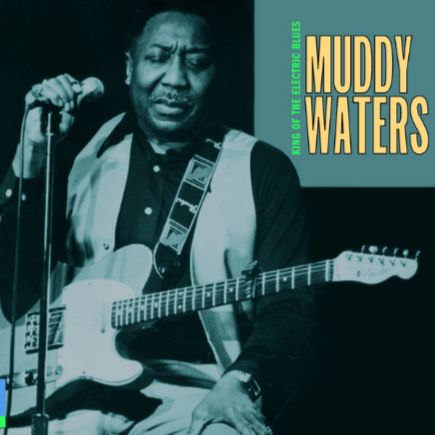
Figure cardinale de l’histoire du blues, considéré le père du blues moderne de Chicago, Muddy Waters incarne le passage décisif entre le blues rural du Delta et l’esthétique urbaine, amplifiée et structurée, qui s’impose à Chicago après la Seconde Guerre mondiale. Né McKinley Morganfield dans le Mississippi, il grandit au cœur d’un univers musical façonné par les work songs, les field hollers et le blues acoustique. Cette matrice sudiste restera au fondement de son langage, même lorsque son art prendra une dimension résolument moderne.
Son installation à Chicago au début des années 1940 marque un tournant. Confronté au bruit de la ville et à l’effervescence des clubs, Muddy Waters électrifie sa guitare et développe un son puissant, direct, profondément expressif. Ce choix technique n’est pas un simple ajustement pratique: il redéfinit l’esthétique du blues. Autour de lui se constitue un groupe emblématique, avec Little Walter à l’harmonica ou Willie Dixon à la contrebasse, forgeant un style collectif immédiatement reconnaissable.
Les enregistrements réalisés pour Chess Records dans les années 1950 constituent un socle historique. Des titres comme Hoochie Coochie Man, I’m Ready ou Got My Mojo Working associent structures traditionnelles, riffs incisifs et textes d’une force symbolique rare, mêlant affirmation identitaire, ironie et mythologie personnelle. La célébrité et le succès s’accompagnent de tournées en Europe et, en 1958, il arrive au Royaume-Uni, où il est entendu en direct par certains des meilleurs musiciens européens de rock et de pop (John Mayall, Jimmy Page, Mick Jagger, Keith Richards, Van Morrison et un adolescent appelé Eric Clapton).
En 1960, il se produit au festival de jazz de Newport, où il est la grande vedette de la programmation. En 1967, il enregistre les fameux albums Super Blues et plus tard, dans les années 1970, il a l’occasion de se produire sur scène avec certains des plus grands musiciens de l’époque, dont Eric Clapton et les Rolling Stones (qui ont pris leur nom de l’une des chansons les plus connues du bluesman). Plus tard, l’album Hard Again (1977) démontre que Muddy Waters, loin d’être une figure figée du passé, reste capable de renouveler son discours tout en conservant son autorité musicale.
Son influence dépasse largement le cadre du blues. Le rhythm and blues, le rock britannique des années 1960 et jusqu’aux formes contemporaines de musiques amplifiées lui doivent une part essentielle de leur vocabulaire. Plus qu’un simple interprète, Muddy Waters apparaît comme un passeur: entre Sud et Nord, tradition et modernité, intimité du blues et puissance collective du groupe.
Muddy Waters, del canto del Delta al lenguaje de las ciudades
Figura cardinal de la historia del blues, considerado el padre del blues moderno de Chicago, Muddy Waters encarna el paso decisivo entre el blues rural del Delta y la estética urbana, amplificada y estructurada, que se impone en Chicago tras la Segunda Guerra Mundial. Nacido como McKinley Morganfield en Mississippi, crece en el corazón de un universo musical moldeado por las work songs, los field hollers y el blues acústico. Esta matriz sureña permanecerá en la base de su lenguaje, incluso cuando su arte adquiera una dimensión decididamente moderna.
Su instalación en Chicago a comienzos de la década de 1940 marca un punto de inflexión. Enfrentado al ruido de la ciudad y a la efervescencia de los clubes, Muddy Waters electrifica su guitarra y desarrolla un sonido potente, directo y profundamente expresivo. Esta elección técnica no es un simple ajuste práctico: redefine la estética del blues. A su alrededor se forma un grupo emblemático, con Little Walter en la armónica o Willie Dixon al contrabajo, forjando un estilo colectivo inmediatamente reconocible.
Las grabaciones realizadas para Chess Records en la década de 1950 constituyen un cimiento histórico. Títulos como Hoochie Coochie Man, I’m Ready o Got My Mojo Working combinan estructuras tradicionales, riffs incisivos y letras de una fuerza simbólica poco común, mezclando afirmación identitaria, ironía y mitología personal. La fama y el éxito se acompañan de giras por Europa y, en 1958, llega al Reino Unido, donde es escuchado en directo por algunos de los mejores músicos europeos de rock y pop (John Mayall, Jimmy Page, Mick Jagger, Keith Richards, Van Morrison y un adolescente llamado Eric Clapton).
En 1960 actúa en el Festival de Jazz de Newport, donde es la gran figura del cartel. En 1967 graba los célebres álbumes Super Blues y, más tarde, en la década de 1970, tiene la oportunidad de subir al escenario con algunos de los músicos más importantes de la época, entre ellos Eric Clapton y los Rolling Stones (que tomaron su nombre de una de las canciones más conocidas del bluesman). Posteriormente, el álbum Hard Again (1977) demuestra que Muddy Waters, lejos de ser una figura anclada en el pasado, sigue siendo capaz de renovar su discurso manteniendo intacta su autoridad musical.
Su influencia supera ampliamente el marco del blues. El rhythm and blues, el rock británico de los años sesenta e incluso las formas contemporáneas de músicas amplificadas le deben una parte esencial de su vocabulario. Más que un simple intérprete, Muddy Waters aparece como un mediador: entre Sur y Norte, tradición y modernidad, intimidad del blues y potencia colectiva del grupo.
Muddy Waters, dal canto del Delta al linguaggio delle città
Figura cardinale della storia del blues, considerato il padre del blues moderno di Chicago, Muddy Waters incarna il passaggio decisivo tra il blues rurale del Delta e l’estetica urbana, amplificata e strutturata, che si afferma a Chicago dopo la Seconda Guerra Mondiale. Nato come McKinley Morganfield nel Mississippi, cresce al centro di un universo musicale plasmato dalle work songs, dai field hollers e dal blues acustico. Questa matrice sudista resterà alla base del suo linguaggio, anche quando la sua arte assumerà una dimensione decisamente moderna.
Il suo trasferimento a Chicago all’inizio degli anni Quaranta segna una svolta. Confrontato con il rumore della città e l’effervescenza dei club, Muddy Waters elettrifica la chitarra e sviluppa un suono potente, diretto e profondamente espressivo. Questa scelta tecnica non è un semplice adattamento pratico: ridefinisce l’estetica del blues. Attorno a lui si forma un gruppo emblematico, con Little Walter all’armonica o Willie Dixon al contrabbasso, forgiando uno stile collettivo immediatamente riconoscibile.
Le registrazioni realizzate per la Chess Records negli anni Cinquanta costituiscono un fondamento storico. Brani come Hoochie Coochie Man, I’m Ready o Got My Mojo Working uniscono strutture tradizionali, riff incisivi e testi di rara forza simbolica, mescolando affermazione identitaria, ironia e mitologia personale. La notorietà e il successo si accompagnano a tournée europee e, nel 1958, arriva nel Regno Unito, dove viene ascoltato dal vivo da alcuni dei migliori musicisti europei di rock e pop (John Mayall, Jimmy Page, Mick Jagger, Keith Richards, Van Morrison e un adolescente di nome Eric Clapton).
Nel 1960 si esibisce al Newport Jazz Festival, dove è la grande star del programma. Nel 1967 incide i celebri album Super Blues e, più tardi, negli anni Settanta, ha l’occasione di esibirsi sul palco con alcuni dei più grandi musicisti dell’epoca, tra cui Eric Clapton e i Rolling Stones (che hanno preso il nome da una delle canzoni più celebri del bluesman). In seguito, l’album Hard Again (1977) dimostra che Muddy Waters, lungi dall’essere una figura cristallizzata nel passato, è ancora capace di rinnovare il proprio linguaggio mantenendo intatta la sua autorevolezza musicale.
La sua influenza va ben oltre il blues. Il rhythm and blues, il rock britannico degli anni Sessanta e persino le forme contemporanee di musiche amplificate gli devono una parte essenziale del loro vocabolario. Più che un semplice interprete, Muddy Waters appare come un mediatore: tra Sud e Nord, tradizione e modernità, intimità del blues e potenza collettiva del gruppo.
Muddy Waters, from the Delta’s song to the language of the cities
A cardinal figure in the history of the blues, widely regarded as the father of modern Chicago blues, Muddy Waters embodies the decisive transition between the rural blues of the Delta and the urban, amplified, and structured aesthetic that took hold in Chicago after World War II. Born McKinley Morganfield in Mississippi, he grew up at the heart of a musical world shaped by work songs, field hollers, and acoustic blues. This Southern matrix would remain at the foundation of his language, even as his art took on a resolutely modern dimension.
His move to Chicago in the early 1940s marked a turning point. Confronted with the noise of the city and the vibrancy of its clubs, Muddy Waters electrified his guitar and developed a powerful, direct, and deeply expressive sound. This technical choice was not a mere practical adjustment: it redefined the aesthetic of the blues. Around him, an emblematic group took shape, with Little Walter on harmonica and Willie Dixon on double bass, forging a collective style that was instantly recognizable.
The recordings made for Chess Records in the 1950s constitute a historical foundation. Songs such as Hoochie Coochie Man, I’m Ready, and Got My Mojo Working combine traditional structures, incisive riffs, and lyrics of rare symbolic force, blending identity affirmation, irony, and personal mythology. Fame and success led to tours across Europe and, in 1958, he arrived in the United Kingdom, where he was heard live by some of the finest European rock and pop musicians (John Mayall, Jimmy Page, Mick Jagger, Keith Richards, Van Morrison, and a teenager named Eric Clapton).
In 1960, he appeared at the Newport Jazz Festival, where he was the leading star of the program. In 1967, he recorded the celebrated albums Super Blues and, later, during the 1970s, he had the opportunity to perform on stage with some of the greatest musicians of the era, including Eric Clapton and the Rolling Stones (who took their name from one of the bluesman’s most well-known songs). Later on, the album Hard Again (1977) demonstrated that Muddy Waters, far from being a figure frozen in the past, remained capable of renewing his musical discourse while preserving his authority.
His influence extends far beyond the blues. Rhythm and blues, British rock of the 1960s, and even contemporary forms of amplified music owe him an essential part of their vocabulary. More than a mere performer, Muddy Waters emerges as a bridge: between South and North, tradition and modernity, the intimacy of the blues and the collective power of the group.